
KWABRE EAST MUNICIPAL EDUCATION DIRECTORATE IN COLLABORATION WITH GHANA EDUCATION SEVICE, GIRLS’ EDUCATION UNIT ORGANISE DISTRICT-LEVEL TWO DAYS TRAINING ON BACK TO SCHOOL CAMPAIGN AND DISSEMINATION OF GUIDELINES FOR PREVENTION OF PREGNANCY AMONG SCHOOL GIRLS AND FACILITATION OF RE-ENTRY INTO SCHOOL AFTER CHILDBIRTH.
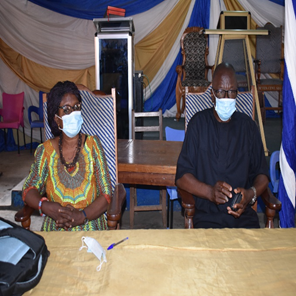
The Municipal Education Directorate of Kwabre East in collaboration with the Ghana Education Service, Girls’ Education Unit through the support of UNICEF has organized a two days’ workshop on district-level training on back to school advocacy campaign and dissemination of the ‘guidelines for prevention of pregnancy among school girls and facilitation of re-entry into school after childbirth for some unions and other stakeholders in the Municipality on Thursday, 14th and Friday 15th January 2021, at the Mamponteng SDA Church.
The purpose for the training workshop was to educate, train and set a District Advocacy Task Force to embark on Sensitization In the various communities in the Municipality to support the effort to ensure that all children in the Municipality return to School after about ten (10) months closure of schools as a result of the COVID-19 pandemic in the country.
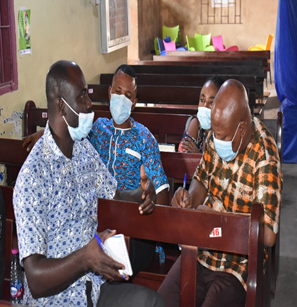
MUNCIPAL DIRECTOR OF EDUCATION.
Mrs. Dora Asare, the Acting Municipal Director of Education for Kwabre East welcomed representatives of the Ashanti Regional Ghana Education Service, stakeholders and other participants for accepting the invitation to participate in the training. Mrs. Asare explained that Kwabre East Municipal is privileged to be part of the ten (10) Districts and Municipalities across the country to benefit from this workshop. Mrs. Asare continued that, since the closure of schools in the country on 20th March 2020, the educational sector is one of the sectors that has badly been affected by the COVID-19 pandemic.
Mrs. Dora Asare explained that, the Ministry of Education organized online programs and E-learning for the students during their stay at home but some of the students did not get access to it, especially those in the rural areas and some other students too did not take advantage of the programs, especially with the E-learning. She explained that, some of the students since the closure of schools have turned into tricycle riders, bus conductors, traders, among others. She again said, some female students too have been forced into early marriages while there are numerous cases of teenage pregnancies.

Mrs. Dora Asare further explained that, the Girls’ Education Unit of Ghana Education Service under the Ministry of Education has organized “back-to-school” advocacy campaign workshop to train various stakeholders to be able to sensitize and educate the general public on the guidelines for preventing teenage pregnancy among school girls and facilitating re-entry into school after childbirth. Mrs. Asare concluded by urging participants to spread the news about this campaign through our various communities whenever an opportunity is given, to ensure that all children return to school and also decrease the rate of teenage pregnancy in the Municipality and country.
MUNICIPAL CHIEF EXECUTIVE (MCE).
The Municipal Chief Executive of Kwabre East, Hon. Nana Osei Asibey Bonsu in his address welcomed participants and facilitators to the workshop. Hon. Asibey used the opportunity to express his gratitude to the supporters and organizers of the workshop and said that, as part of the responsibilities of the Assembly, official notice has been given to various groups, unions, churches among others about the official resumption of schools.
Hon. Asibey Bonsu in his conclusion said that, the training workshop is a very important one so he urged participants to fully participate in it to gather enough knowledge and information about the purpose of the workshop so that, they can also share it with other members in the various communities in the Municipality for the development of Kwabre East Municipality and the country as well.
ASHANTI REGIONAL GUIDANCE AND COUNSELLING DIRECTOR.
Mr. Stephen Ofori, the Guidance and counselling Director of the Ashanti Regional Ghana Education Service gave an overview of the back-to school advocacy campaign and explained that, the Girls’ Education Unit under the Management of Ghana Education Service with support from UNICEF have organized the “back-to-school campaign” to train and form task force to help sensitize other members of various communities about the advocacy. He explained that, the campaign and training will go a long way to encourage and educate students to come back to school no matter the situation or circumstance they have found themselves in. He encouraged participants to join in the campaign so that, the information can be disseminated across the municipality and other parts of the country.
ASHANTI REGIONAL EARLY CHILDHOOD EDUCATION DIRECTOR.
The director of early childhood education of Ghana Education Service in the Ashanti Region, Mrs. Evelyn Kwarteng during the training delivered a presentation on “Addressing Safe Schools’ Issues”. She explained that, a safe school is a school with zero tolerance for any form of violence such as bullying, sexual harassment and other forms of violence or immoral acts that may cause unsatisfaction for any student present. She explained that, a safe school should possess all the necessary materials and equipment that will make a student feel comfortable and secured when acquiring knowledge and an unsafe school is a school with unhealthy environment which poses a high risk of discrimination among others. She explained that, 51% of children aged 5 to 13 years are exposed to severe physical discipline. She said, (94%) of children aged 1 to 14 years are reported to have experienced a form of violent discipline. Mrs. Kwarteng explained that, every child at age 4 and above have the right to education and there are legal framework backing it but some minor students are exposed to hard labour while they are supposed to be in school.
Mrs. Kwarteng said that, school violence which is a behavior that results in humiliation, damage, or injury to another person and can also result in someone living in fear of another person’s behaviour can also lead to unsafe school for a student. She used the opportunity to urge teachers to avoid discrimination and corporal punishments among students since it can create violence and make a school unsafe for a child. Mrs. Kwarteng explained that, COVID-19 will relate so much with education negatively and positively in diverse ways like bullying, distancing away from students showing signs and symptoms of COVID-19 like coughing, sneezing, etc, sharing of nose masks among students, sharing of items like pencils, food, hand sanitizers, among others.
Mrs. Evelyn Kwarteng in the course of the training also gave another presentation on “addressing the psychosocial impact of COVID-19 on school personnel”. She explained that, psychosocial refers to the relationship between the psychological dimension of a person and the social dimension of the person. She said, COVID-19 pandemic has really brought about a lot of challenges and trauma to children and as a result of that, they need psychosocial support in diverse ways like showing love to them, giving them a listening ear, understanding them, appreciating them, trusting them for them to trust us among others. She explained that, psychosocial support can be both preventive and curative because it prevents the risk of developing mental health and cures those who have also developed mental health.
Mrs. Kwarteng explained that, there are some principles of social support which includes right, child friendly, disability friendly, culturally sensitive and sustainable, and after applying these principles, and it should promote five (5) essential principles, thus, a sense of security, calamity, self-community, efficacy, social connectedness and hope. She explained that psychosocial support is important because all children need psychosocial support for their psychological and emotional wellbeing.
Mrs. Kwarteng through her presentation explained that, COVID-19 has had so many impact on Education in diverse ways which include progress made in the past, widening the gap in the disparities in education provision for many vulnerable children and youth, reduction in the provision of some essential services to children, negative effect on the ability of parents to work, hence after the economic situation of parents, increase in teenage pregnancies, some learners from poor homes may not return to school, lack of concentration in school. Aside the negative effect of COVID-19 on education, there are other positive effects of it on education which includes, roll-out of e-learning and distance learning packages among others. Mrs. Evelyn Kwarteng concluded by encouraging the formed task force to go on with the campaign and sensitization so that, every student beginning from the age of 4 onwards, to go back to school.
ASHANTI REGIONAL GIRLS CHILD EDUCATION DIRECTOR.
Mrs. Hannah Amponsah, Director of Girl Child Education Unit of Ghana Education Service delivered a presentation on “prevention of pregnancy and re-entry of young mothers”. She explained that, per research conducted across the Ten (10) traditional regions of Ghana, has proven that, about 35,362 students from upper primary to Senior high school level have engaged in teenage pregnancy in a period of five (5) years with Ashanti Region leading.
Mrs. Amponsah explained that, teenage pregnancy does not stop a teenage girl from going back to school to acquire knowledge and skills. The Ghana Education Service has laid down some policies to guide girls with teenage pregnancy to make them feel comfortable in their course of studies. She concluded by saying that, the Girls’ Education Unit of Ghana Education Service under the Ministry of Education is not promoting teenage pregnancy but rather, giving opportunities to teenage girls to have access to education. The service is promoting total abstinence, building self-esteem and confidence in the teenagers and also provide information of sources of support services.
CONCLUSION
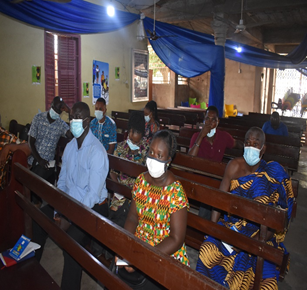
The two days’ workshop was very successful although some participants were late for the training. All COVID-19 safety protocols were strictly observed and nose masks were distributed to participants without masks. Participants expressed satisfaction and urged their colleagues to sensitize the various communities about the back-to- school campaign. They also requested for frequent workshops to be organized to acquire enough knowledge for the sensitization.
The workshop was well attended by participants across the Municipality. In attendance were, Florence Okyere Boateng, Girl Child Coordinator Kwabre East Municipal, Mad. Mavis O. Anane, P.R.O of Kwabre East Municipal Education Directorate, and other Stakeholders.






Add Comment